
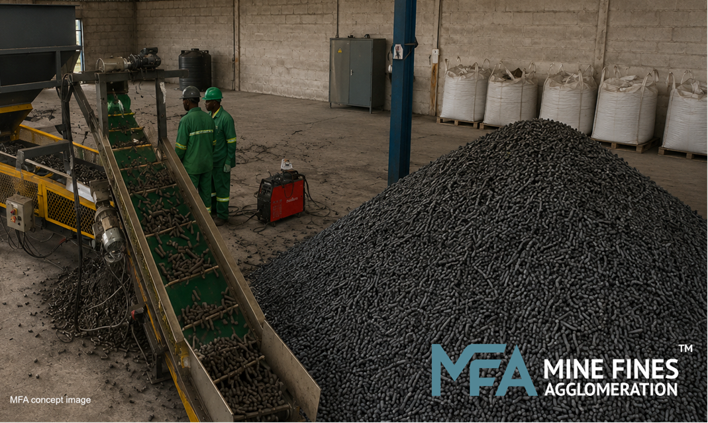
MFA technology.
As tin producers seek to maximise recovery from existing resources while reducing waste, increasing attention is being given to technologies capable of recovering value from fine cassiterite particles that are often difficult to recover or efficiently utilise during mineral processing.
One emerging approach is Mine Fines Agglomeration (MFA), which is being supported for commercialisation by Green Tree Group. The technology is designed to convert suitable fine mineral particles and recovered concentrates into durable, water-resistant agglomerates that are easier to handle, transport and evaluate for downstream processing. Green Tree Group is currently seeking industry partners to support the technology’s advancement through the UK Government’s Critical Minerals Accelerator programme, with the aim of progressing the technology through independent optimisation and validation (currently estimated at Technology Readiness Level (TRL) 4–5).
The challenge of fine cassiterite recovery
Tin ore must first be crushed and ground to liberate cassiterite before it can be recovered using mineral processing techniques, most commonly gravity separation. While these processes are highly effective for coarse particles, they also generate increasing quantities of very fine cassiterite.
As particle size decreases, gravity separation becomes progressively less efficient, meaning valuable cassiterite can report to slimes, tailings and other waste streams instead of being recovered into concentrate. Although these fine fractions may still contain economically significant quantities of tin, recovering them remains technically challenging.
An alternative approach
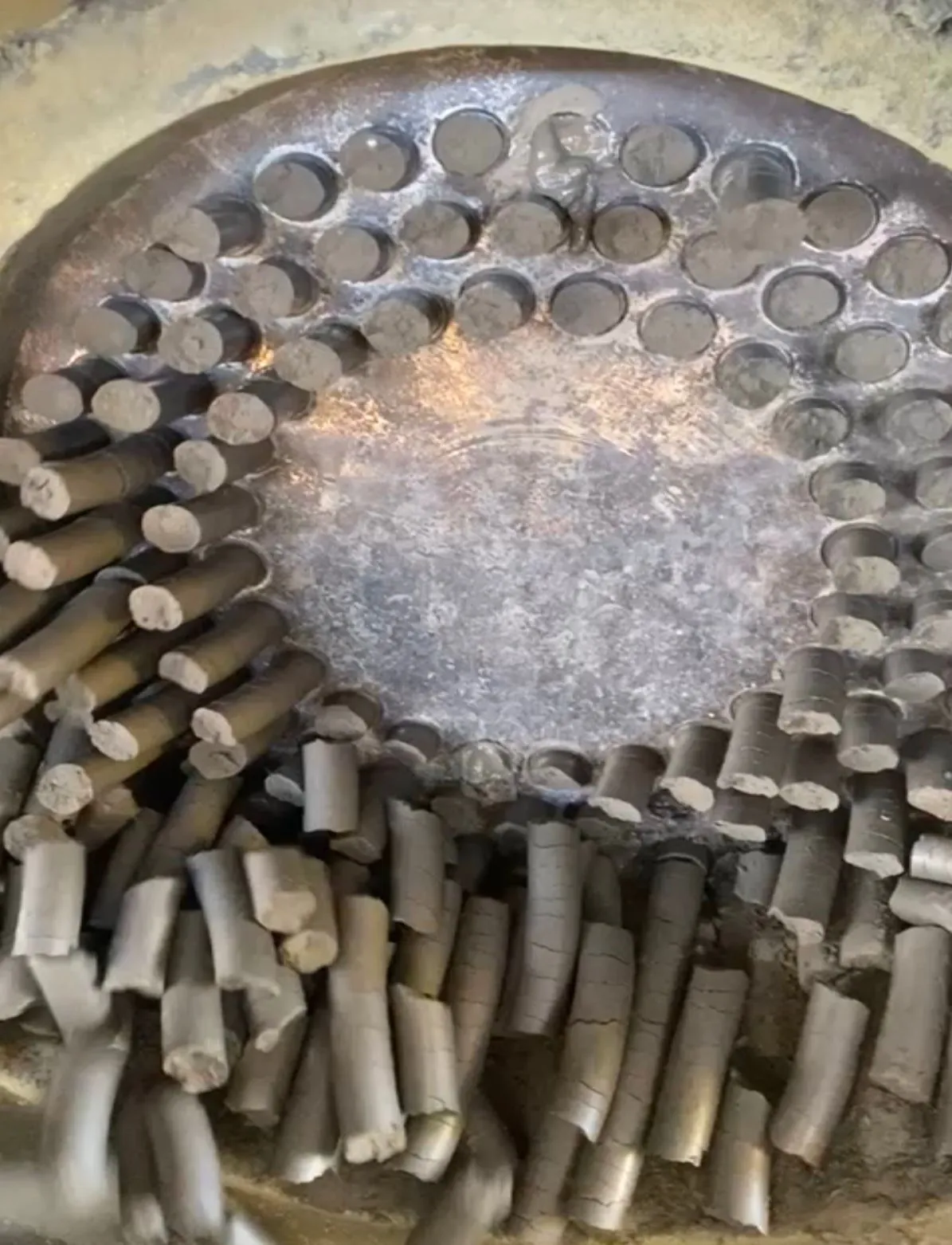
Production of mine fine agglomerates.
Mine Fines Agglomeration (MFA) aims to address this challenge by binding suitable fine mineral particles into durable, water-resistant agglomerates using a low-energy, low-temperature process. According to the company, the resulting agglomerates retain the mineral composition of the original feed while significantly improving its physical handling characteristics.
Unlike conventional agglomeration methods that often require high-temperature treatment, the process operates under relatively mild conditions and has been developed to accommodate a wide range of particle sizes, including fine materials, dusts and slimes that are typically difficult to utilise. The company is targeting industrial throughputs in excess of 1,000 tonnes per day per modular processing unit, although the technology is currently progressing towards pilot-scale demonstration.
Rather than replacing existing mineral beneficiation processes, MFA is intended to complement them by providing an additional processing stage for suitable fine mineral streams once recoverable material has been identified.
For the tin industry, the primary opportunity lies in converting fine cassiterite that might otherwise remain underutilised into a material better suited for handling, storage, transportation and subsequent downstream processing or metallurgical evaluation.
Potential benefits for tin producers
If successfully demonstrated at commercial scale, agglomeration could offer several advantages for tin operations.
Recovering additional cassiterite from historical tailings, slimes and fine processing streams could increase overall metal recovery without requiring additional mining. This aligns with growing industry efforts to improve resource efficiency while reducing waste generation.
Producing a more consistent agglomerated feedstock may also simplify the handling, storage and transportation of fine mineral materials. Where recovered fine concentrates are destined for smelting, agglomeration could provide a more uniform feed material while helping to reduce dust generation during handling.
Rather than viewing fine mineral fractions solely as a waste-management challenge, MFA seeks to transform suitable recovered fine mineral streams into stable, transportable products capable of supporting improved logistics, greater resource efficiency and more effective downstream utilisation.
While further technical validation will be required as the technology progresses towards higher technology readiness levels, the concept illustrates the growing focus on recovering value from materials that have historically been considered difficult to utilise.
Supporting more resource-efficient tin production
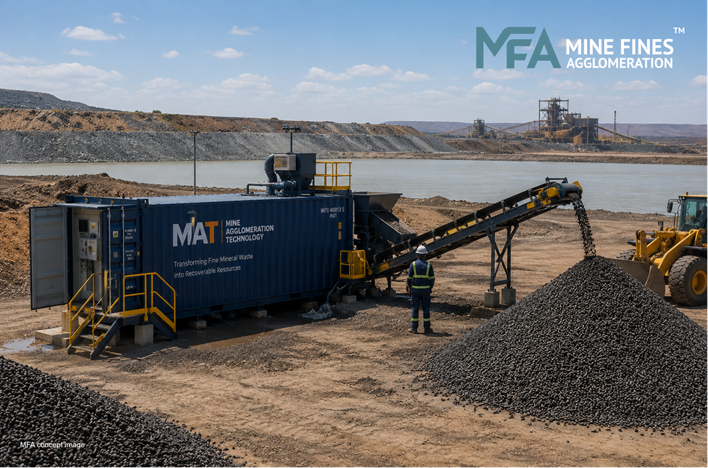
Portable MFA equipment.
As ore grades decline and producers increasingly look to extract greater value from every tonne of material processed, technologies that improve utilisation of fine mineral fractions are attracting growing interest.
Agglomeration represents one of several approaches being explored to improve utilisation of tin-bearing fines, alongside advances in fine-particle gravity separation, flotation, sensor-based sorting and alternative beneficiation technologies. Together, these innovations have the potential to reduce losses throughout the mineral processing flowsheet, supporting more resource-efficient and sustainable tin production.
Green Tree Group is currently seeking collaboration with mining companies, mineral processors, universities and critical minerals organisations to help validate the technology across a range of critical mineral applications and support its progression towards commercial deployment.
To learn more please contact [email protected] or [email protected].