
Gem Recovery Systems (GRS) and the Fraunhofer Institute for Integrated Circuits IIS are exploring the application of dual-energy X-ray technology to see inside cassiterite-bearing ores. Laboratory testing has shown that cassiterite can be detected using the system, providing a basis for further work on its potential role in the pre-concentration of tin ores.
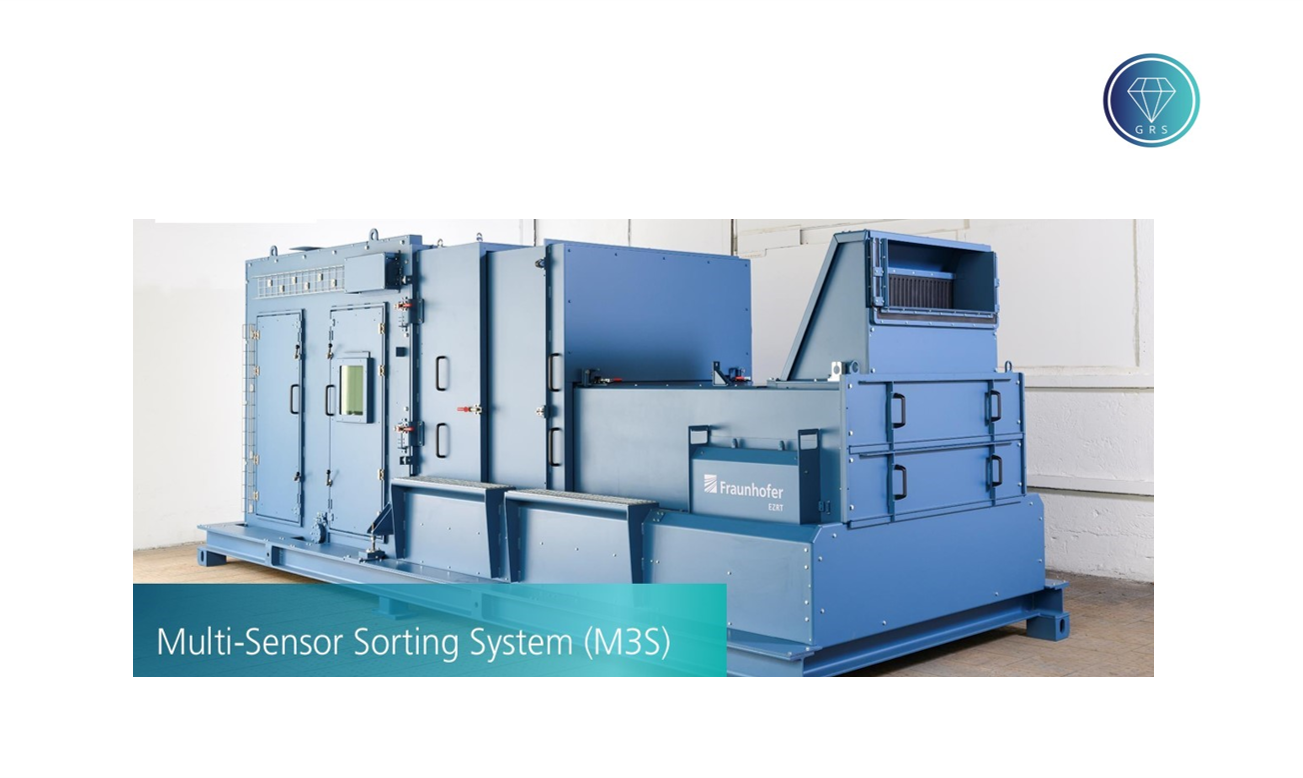
Fraunhofer’s high throughput, industrial capacity XRT sorting system at the Furth base.
Sensor-based ore sorting can separate mineral-bearing rock from lower-value or barren material before it enters later stages of processing. For tin operations, this could provide a route to reject part of the barren material after initial crushing, reducing the volume requiring further treatment.
Analysing the ore
The GRS–Fraunhofer Rock Scanning Technology (RST) passes crushed ore along a conveyor belt between an X-ray source and detector. Individual rock particles, or clasts, can then be analysed and directed into different material streams according to their X-ray response.
The system uses dual-energy X-ray transmission, taking measurements at two different X-ray energy ranges. Combining these measurements provides information related to material density and effective atomic number, which can help distinguish target mineralisation from surrounding host rock.
This is particularly relevant to cassiterite. Tin has a relatively high atomic number of 50 and cassiterite is a dense mineral, producing a strong X-ray attenuation response compared with many common host-rock minerals.
The technique does not directly determine a mineral’s chemical composition. Instead, where the expected mineralogy of an ore is already understood, differences in X-ray response can be used to help classify mineralised and barren particles.
Because X-rays pass through the rock, the system can also obtain information from mineralisation contained within a clast rather than only from material exposed at its surface. The sorting process itself is dry and does not require added water.
Fraunhofer is also developing image-processing and artificial-intelligence techniques that could support particle recognition and classification within sensor-based sorting systems.
Cassiterite successfully detected
GRS and Fraunhofer IIS have conducted laboratory testing with cassiterite, with the mineral producing a clear response that could be distinguished from the other materials examined.
The wider research programme has also investigated minerals that can occur alongside cassiterite in complex deposits, including tantalite, columbite and wolframite/ferberite.
Further testing using representative natural ores will be needed to establish performance across different host rocks, mineral associations and ore characteristics.
Potential for tin pre-concentration
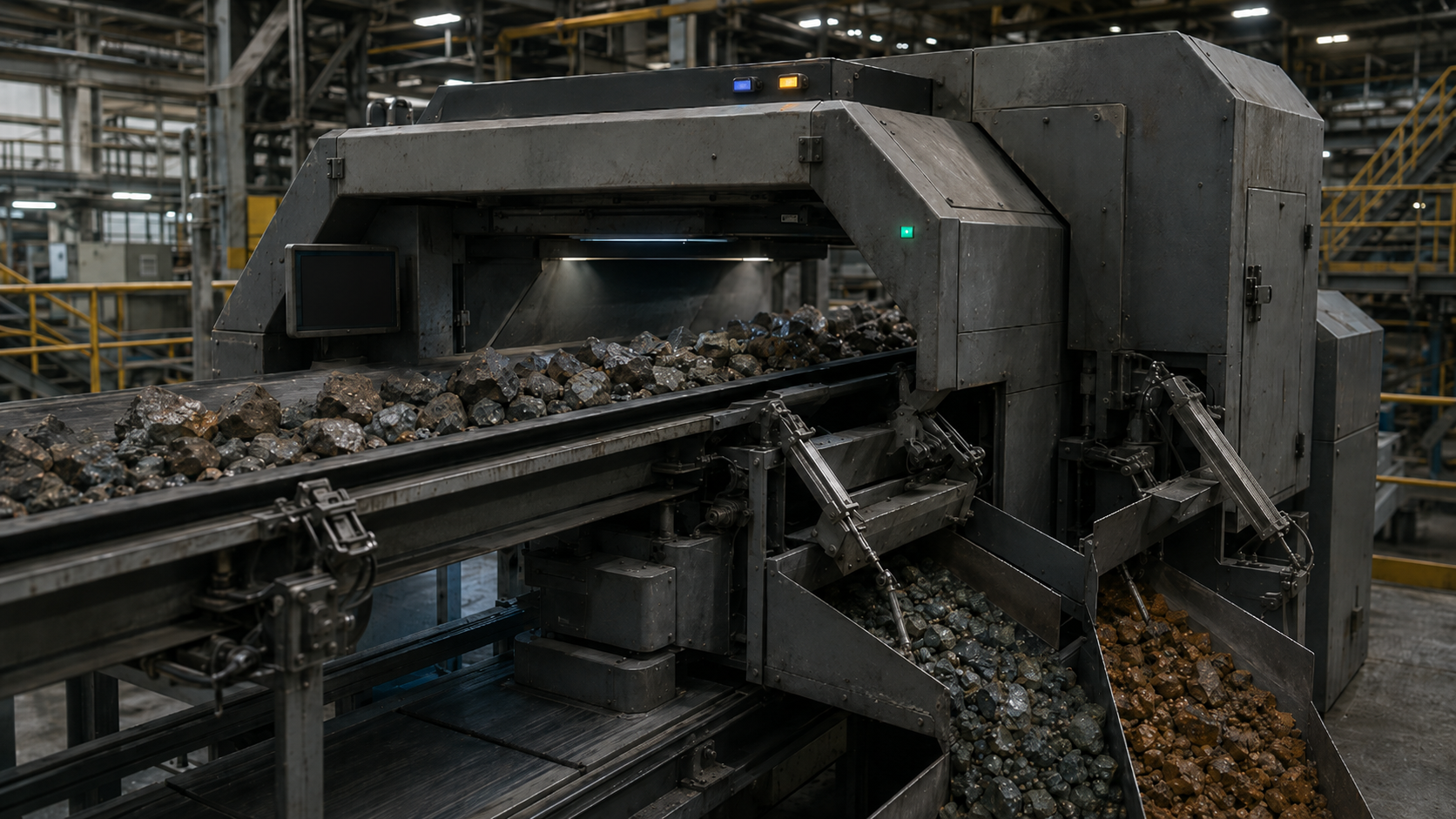 For tin, one of the main potential applications of the RST system is pre-concentration.
Run-of-mine ore contains both mineralised and barren material. If lower-value rock can be identified and removed after initial crushing, a smaller and more concentrated stream can be sent to subsequent beneficiation stages.
Reducing the volume of material requiring further crushing, grinding and concentration could improve resource and energy efficiency. The potential benefit would be highly deposit-specific, depending on factors including cassiterite distribution, mineral grain size, host-rock mineralogy and the degree to which mineralised and barren clasts can be separated at the sorting stage.
Moving towards representative ore trials
Although the cassiterite work remains laboratory-based, Fraunhofer IIS already operates industrial-scale sorting equipment.
The demonstrator uses a conveyor approximately 1.2 metres wide, operates at belt speeds of up to 3 metres per second and can analyse and physically separate material into different streams.
GRS and Fraunhofer are now looking towards further trials using representative ores.
For tin, these trials could provide important quantitative measures including tin recovery, mass rejection and feed-grade improvement. This would help establish where the technology could potentially fit within tin beneficiation flowsheets.
For more information, contact our ITA Technology Team.