Indian recycler Rikayaa Greentech has been granted a patent for an integrated process that recovers tin from electronic waste and other secondary feedstocks, refining it to a minimum purity of 99.9%. The route combines mechanical separation, lower-temperature vacuum treatment, chloride fluxing and zone refining.
 The Indian Patent Office granted Rikayaa Greentech Patent No. IN 602754 on 16 September 2026, following application 202511050927. The patent, titled A Method for Refining Tin from E-Waste, covers the combined process rather than any single treatment stage.
According to Rikayaa, the route begins with mechanical separation of a tin-bearing fraction from granulated scrap. This is followed by a vacuum treatment stage, chloride flux treatment of the molten material and final zone refining.
The patent specifies a final product containing at least 99.9% tin, with purity verified using X-ray fluorescence (XRF) or ICP-OES analysis.
Lower-temperature vacuum treatment
One of the more unusual features of the process is the temperature used during the vacuum stage.
Rikayaa says this stage operates at around 500–700°C, below temperatures commonly reported for vacuum-based tin refining routes.
Rather than relying on the vacuum stage to remove all major impurities, the process divides the purification work between different stages. The subsequent chloride flux treatment targets impurities including copper, iron and arsenic, reducing the need for more severe conditions during vacuum processing.
This allows the tin to remain in the crucible as a molten residue rather than being distilled away. Rikayaa says this can support tin recovery while lowering energy requirements and reducing the purification burden on the final zone-refining stage.
Expanding secondary tin recovery
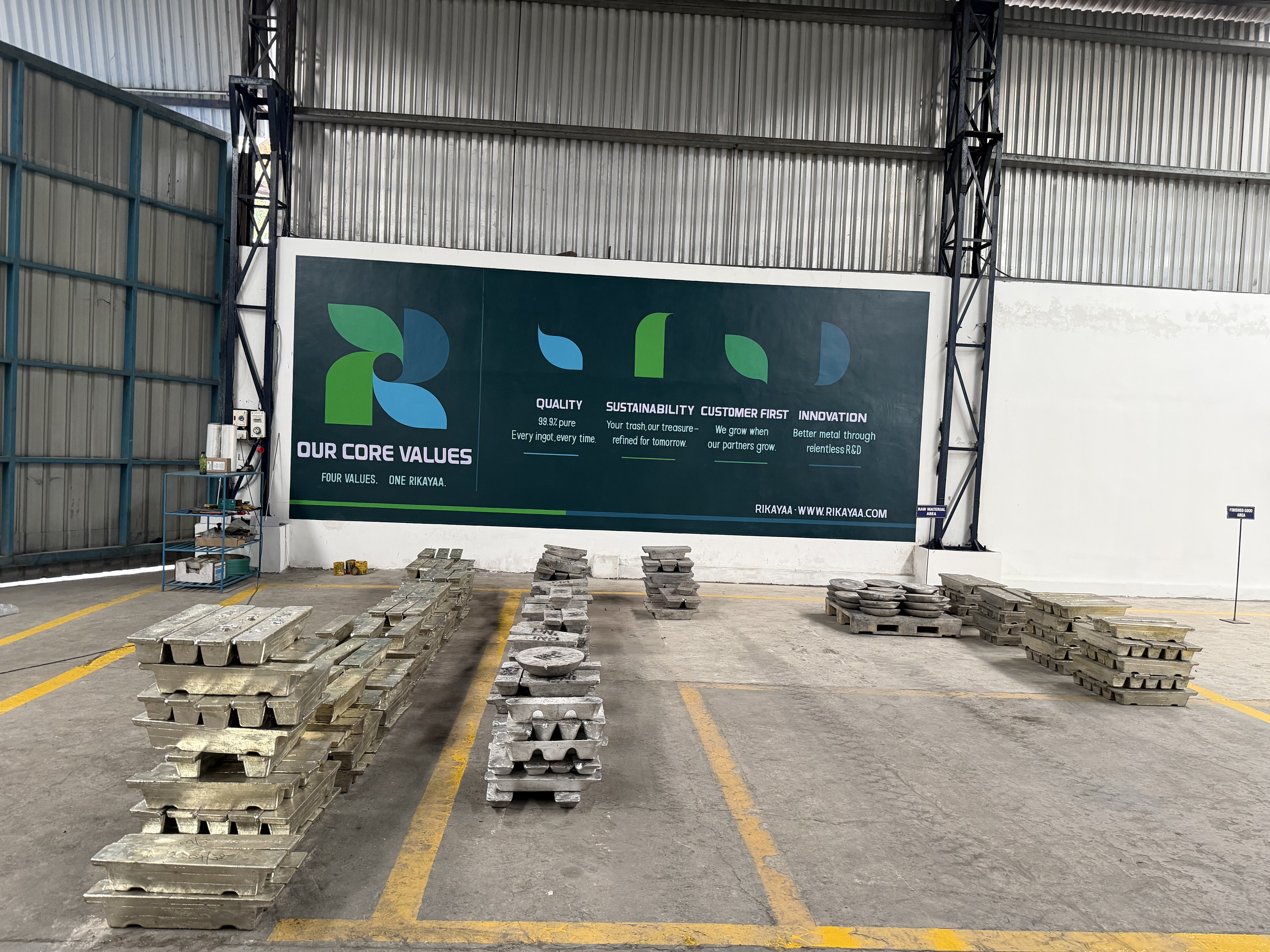
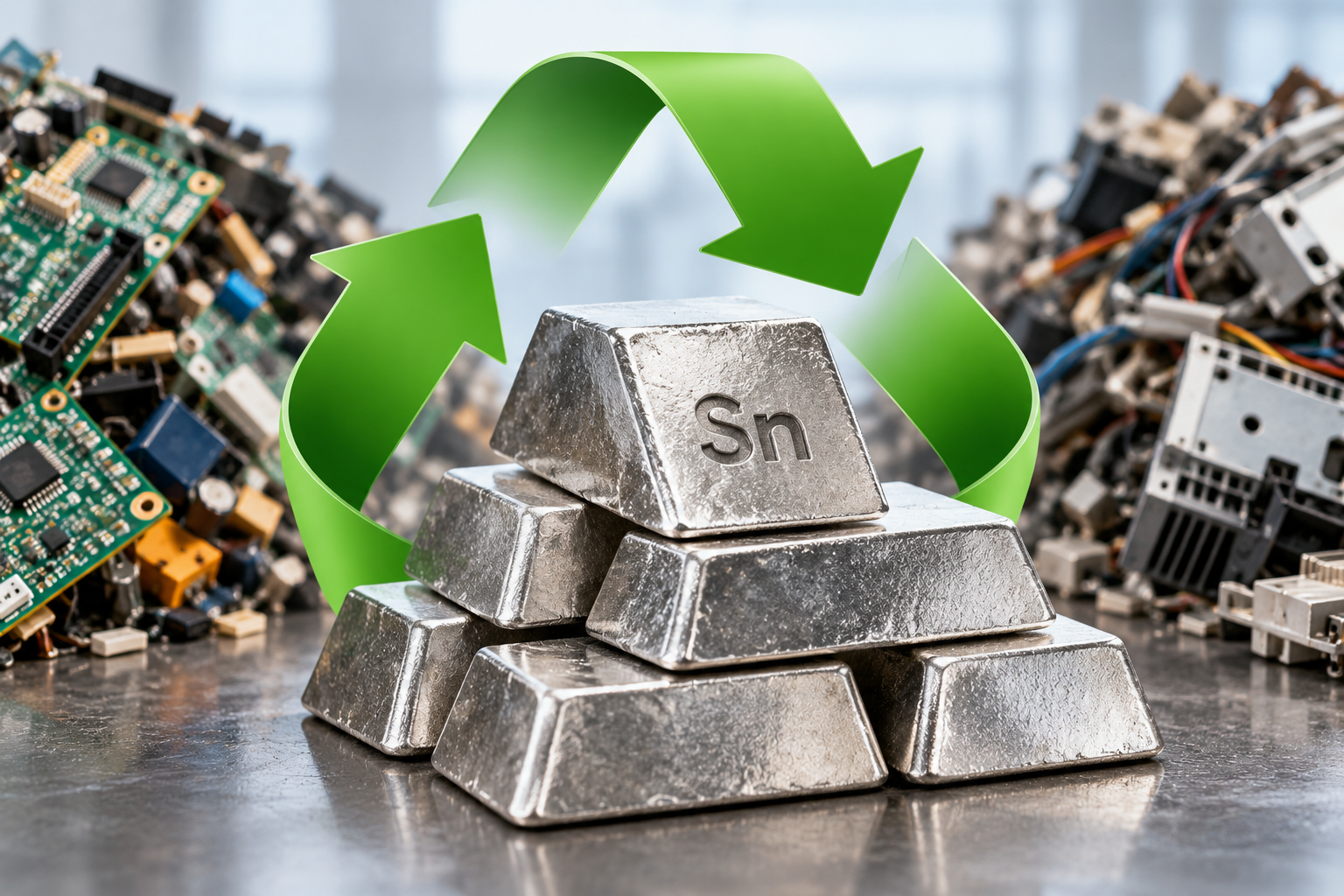 Rikayaa’s Baddi facility has an annual refining capacity of 1,500 tonnes of refined tin.
Not all of this capacity currently comes from electronic waste. E-waste and printed circuit board scrap form part of a broader mix of secondary tin-bearing feedstocks processed at the facility.
Rikayaa states that the proportion of e-waste-derived material is growing, with the patented process allowing these more complex secondary materials to be refined to higher purity than would otherwise be possible.
Electronic waste represents a significant potential source of secondary tin because the metal is widely used in solder on printed circuit boards and other electronic assemblies.
The economics of recovering tin from e-waste will depend on factors including feed composition, processing costs and the value of the recovered metal. Higher tin prices can increase the potential value of these secondary resources, strengthening the incentive to recover tin that might otherwise remain in waste streams.
Rikayaa’s patented route provides another example of growing commercial interest in recovering tin from end-of-life electronics and developing more circular sources of refined metal.
For more developments in tin recycling and emerging technologies, visit Tin Valley.