
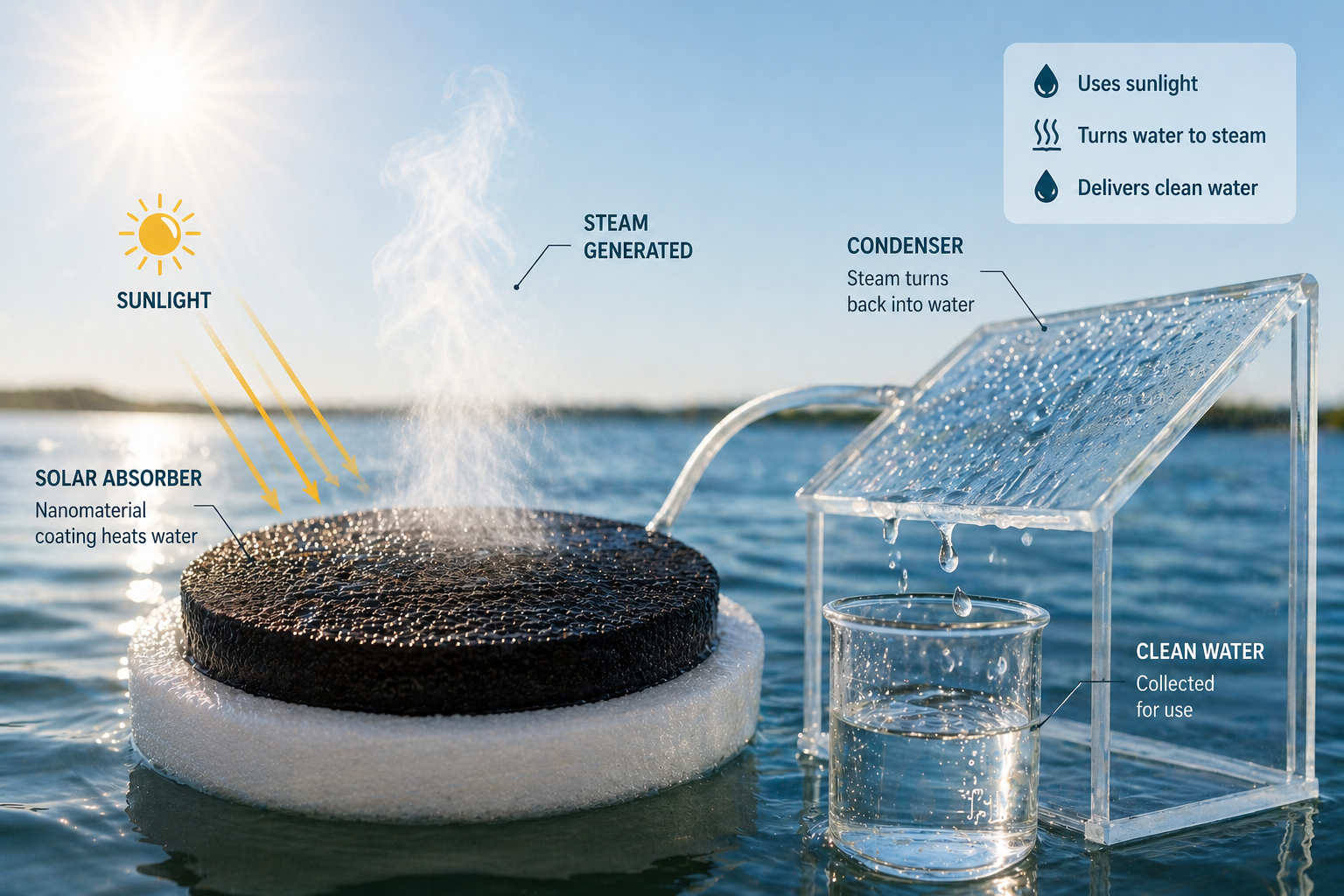
 A new study shows how tin dioxide (SnO₂), a widely used tin compound, could help make solar-powered water purification more efficient and practical.
Solar steam generation uses sunlight to heat water and produce steam, which can then be condensed into clean drinking water. It’s a promising low-energy solution for regions facing water shortages.
Gold and silver are often used in these systems because they interact strongly with light, converting it into heat very efficiently. However, they come with limitations. On their own, they tend to absorb only a narrow part of the sunlight spectrum and can become unstable or clump together over time, reducing performance.
To overcome this, researchers coated gold and silver nanoparticles with tin dioxide. This thin coating helps the particles absorb a wider range of sunlight while also improving their stability.
The results showed clear benefits. The tin dioxide-coated materials captured more of the sun’s energy and retained heat better than both uncoated materials and water alone. This led to a small but measurable increase in steam production under simulated sunlight.
In simple terms, tin dioxide helps these materials work more efficiently and last longer.
For the tin industry, this highlights another emerging opportunity. Tin dioxide is already widely used in electronics and coatings, and its role in clean water and energy technologies is becoming increasingly important.
As demand grows for low-cost, sustainable solutions, tin-based materials could play a valuable role in improving how solar technologies are designed and deployed. Learn more at Tin Valley.